Industrial Waste Incinerators
The Incinerator Range
From a standalone unit to a fully integrated system with wet or dry scrubbing and ceramic filtration, the range steps up with your emissions and site requirements.
Standard Incinerators
The standalone workhorse range, V23 to V500.
See overviewBiomass Incinerators
No diesel or gas supply required.
See overviewWet Scrubbing
Acid gases absorbed from the flue gas with an alkaline solution.
See overviewCeramic Filtration
Dry scrubbing plus particulate control to 99.99%, using no water.
See overviewStandard Incinerators for Medical, Hazardous and General Waste
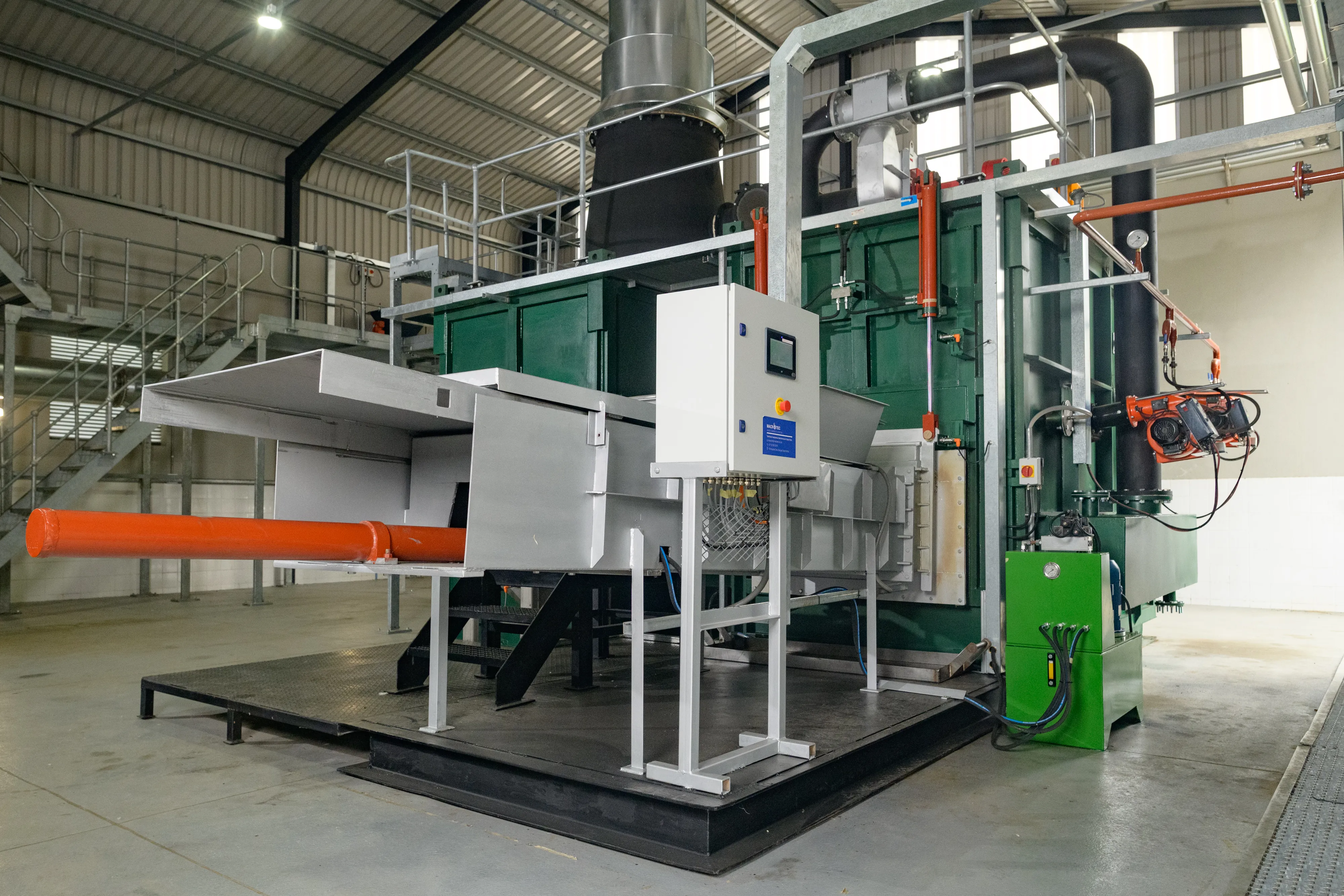
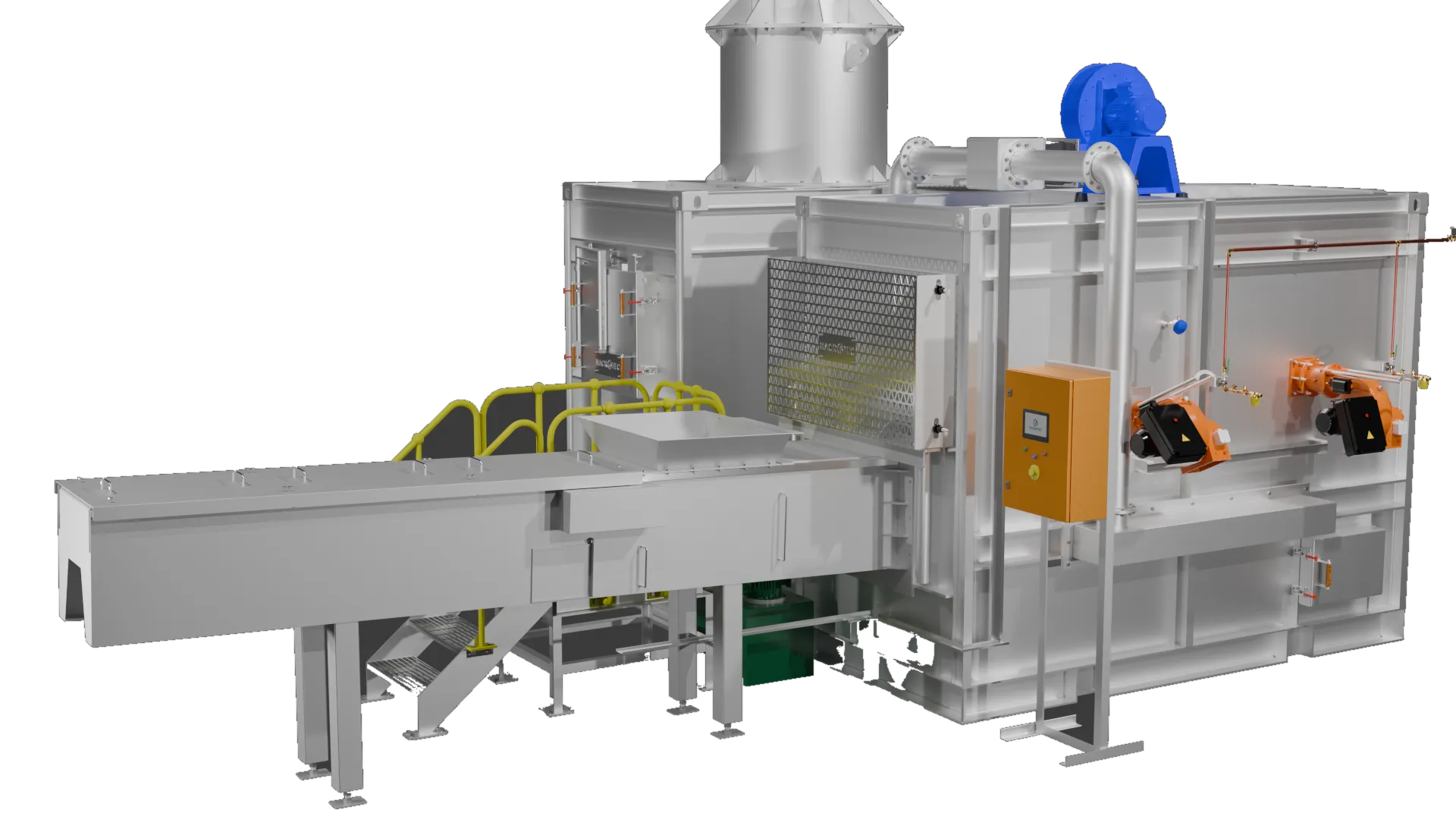
Our standard incinerators are the units working all over the world: nine standalone models from the compact V23 to the high-capacity V500, processing from 10 to 370 kilograms of waste per hour. Each is a two-chamber machine that reduces medical, hazardous, animal, pharmaceutical and general waste to sterile ash at 850 to 1,100 degrees Celsius.
Units run on diesel, LPG, natural gas, dual fuel or waste oil, with manual or automatic feeding and continuous de-ashing, so operations do not stop to empty the chamber. Hospitals, mines, hotels and municipalities run the same proven platform, sized to their waste stream.
- 9 models: V23 to V500
- 10 to 370 kg/hr throughput
- Two-chamber combustion
- Diesel, gas, dual fuel or waste oil
- Manual or automatic feeding
- Continuous de-ashing
Biomass-Fuelled Incineration with Improved Emissions
For rural and remote sites without a reliable fuel supply, our biomass incinerators replace diesel or gas entirely, using biomass to reach and hold the required combustion temperature. The result is a waste incinerator that keeps running where fuel logistics would defeat a conventional unit.
Because the unit runs continuously rather than in stop-start batch cycles, no preheat is needed, biomass consumption is lower, and the more controlled combustion process improves emissions. The refractory, insulation and tall-stack design carry over from the standard range.
- No diesel or gas required
- Continuous operation, no preheat
- Lower biomass consumption
- Improved emissions control
- 7 to 15 m stack heights
- 1,500°C-rated refractory
Incinerators with Wet Scrubbers
Where emission limits demand more than good combustion, a wet scrubber treats the flue gas downstream of the second chamber. The gas stream is drawn through a fine spray of alkaline solution, which cools it and absorbs acid gases, including hydrogen chloride, sulphur dioxide and hydrogen fluoride, before the stack.
Wet scrubbing handles high acid-gas loads well and suits sites with a reliable water supply and a route for treating the resulting effluent. Where water is scarce or effluent handling is impractical, the dry scrubbing and ceramic filtration option below reaches comparable compliance using no water at all.
- Neutralises HCl, SO₂ and HF
- High acid-gas removal efficiency
- Alkaline reagent dosing
- Flue gas quenching and cooling
- Suits high acid-gas waste streams
- EU and South African compliance
Incinerators with Ceramic Filtration
This is the dry route to compliance. A dosing agent, sodium bicarbonate and/or activated carbon, is injected into the flue gas to neutralise acid gases and adsorb heavy metals and dioxins. The gas then passes through ceramic elements that capture sub-micron particles, PM2.5 and PM10, at up to 99.99 percent efficiency.
Because the scrubbing is dry, there is no effluent and no water treatment to build, licence or maintain. The elements self-clean by reverse pulse, and removing acid gases at high temperature prevents dioxins reforming downstream, which is why the combination is recognised as Best Available Techniques under the EU IED.
- No water, no effluent treatment
- Bicarbonate or activated carbon
- Up to 99.99% filtration efficiency
- Sub-micron, PM2.5 and PM10
- Self-cleaning reverse-pulse elements
- Best Available Techniques (BAT)
Built to Perform Where Reliability Is Not Optional
Larger combustion chambers
Our chambers are larger than competitors' for a given capacity, giving a longer reaction time, more complete combustion and lower emissions.
Real-time combustion control
A fast-response oxygen analyser and controlled combustion air adjust conditions as they change, holding performance and cutting emissions.
Wet or dry emissions control
Acid gases, dioxins and sub-micron particulate are captured to 99.99%, by wet scrubbing or by dry scrubbing with ceramic filtration, meeting Best Available Techniques.
Engineered for a Wide Range of Waste Streams
Macrotec incinerators are in service across healthcare, industry, agriculture, mining, hospitality and municipal operations, from hospital incinerators handling medical waste to animal incinerators at abattoirs and farms.
Healthcare & medical waste
Hazardous waste & sludges
Animal & abattoir waste
Mining & remote camps
Hotels, lodges & resorts
Municipal & general waste
Emissions and Safety, Independently Certified
Our incinerators are engineered to meet the emission and safety requirements that govern our clients' operations, including the EU Industrial Emissions Directive (2010/75/EU), South African NEM:AQA, and WHO guidance for healthcare waste, with the applicable limits confirmed for each project. Our quality, environmental and occupational health and safety management systems are independently certified to ISO 9001, ISO 14001 and ISO 45001.
Tell Us About Your Waste Challenge
Tell us about your waste, energy or emissions challenge and our engineers will help you specify the right incinerator.